Skip to content
Top-rated outdoor gear, ranked

Best Of 2026

Best Off-Grid Generators of 2026

Our top 10 picks, independently ranked. Budget to premium.

Updated

Off-grid living puts a different set of demands on a generator than suburban storm backup does. When the nearest hardware store is an hour of dirt road away and there's no utility line to fall back on, the machine in your shed isn't a convenience. It's infrastructure. That changes the math: fuel flexibility matters more than headline wattage, because gasoline goes stale in months while propane and natural gas store almost indefinitely; runtime and fuel efficiency matter more than peak surge, because every gallon has to be hauled in; and serviceability matters most of all, because there's no warranty truck coming up your driveway.

This guide spans the full market a cabin owner or rural homeowner actually shops, from a 39-pound dual-fuel inverter you can carry one-handed to a quiet workshop, up through 13,000-watt tri-fuel beasts that will run a well pump, a deep freeze, and a mini-split at the same time, and finally to the battery-and-solar systems that are quietly replacing fuel altogether for people who'd rather never hear an engine again. We deliberately included conventional engine generators and modern solar power stations side by side, because for off-grid life the honest answer is usually 'both'. A battery system for silent daily living and a fuel generator for the dark, windless January week when the panels can't keep up.

Every product below is a real model you can buy in 2026, and we've tried to be candid about the trade-offs that the spec sheets gloss over: cold-weather starting, true noise levels at the porch rather than at 23 feet, and how much of that 'whole-home' wattage you can actually lean on continuously.

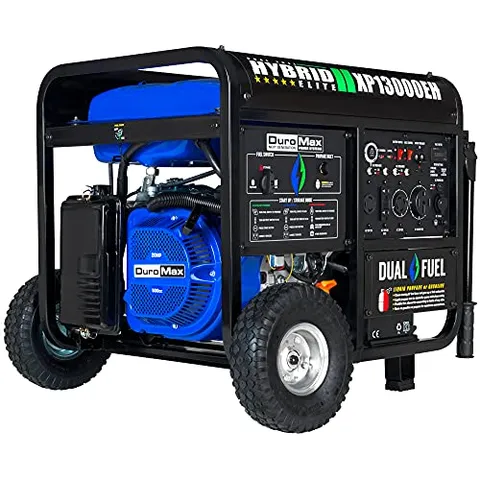
DuroMax XP13000EH 13,000-Watt Dual Fuel Portable Generator
Best OverallMid-range

1. DuroMax XP13000EH 13,000-Watt Dual Fuel Portable Generator

DuroMax

$1,399–$1,799

A 13,000-watt dual-fuel workhorse that genuinely backs up a whole off-grid home (well pump, freezer, AC and all), at a price well under the standby-generator class. The combination of real whole-house power, propane storage flexibility, and a transfer-switch-ready 50A outlet makes it the most complete answer for most rural homeowners.

Best for: Rural homeowners who want true whole-home backup without standby-generator prices

13,000 peak / 10,500 running watts handles whole-home essential circuits at once · Runs on gasoline or propane, so you can store fuel long-term · 50A transfer-switch-ready outlet plus electric start and 3-year warranty

226 lb and loud, needs wheels and a spot away from the house · Several owners report hard starting in deep cold without an engine warmer

Sources: duromaxpower.com, amazon.com, generatorbible.com, gridproofgear.com
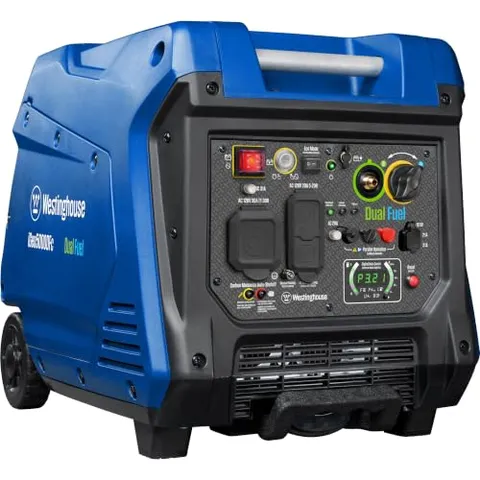
Westinghouse iGen4500DFc Dual Fuel Inverter Generator
Best ValueMid-range

2. Westinghouse iGen4500DFc Dual Fuel Inverter Generator

Westinghouse

$799–$999

The most sensible single generator for a cabin: quiet inverter power clean enough for electronics, dual-fuel flexibility, an RV-ready 30A outlet, and up to 18 hours of runtime. For the off-gridder who wants one do-everything machine they can sleep next to, this is it.

Best for: Cabin and RV owners who want one quiet, efficient, do-it-all generator

Quiet inverter output safe for laptops, routers and sensitive gear · Dual-fuel with electric and remote key-fob start · RV-ready TT-30R outlet and up to 18-hour runtime on gas

3,700 running watts won't run a well pump and AC together · Some owners report frustrating warranty service

Sources: amazon.com, westinghouse.com, lowes.com, acmetools.com

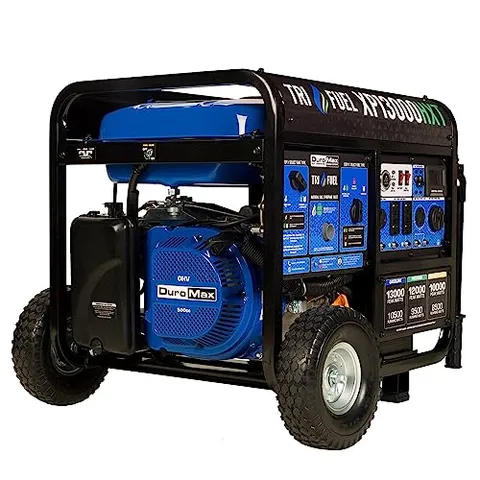
DuroMax XP13000HXT 13,000-Watt Tri-Fuel Portable Generator
Editor's PickPremium

3. DuroMax XP13000HXT 13,000-Watt Tri-Fuel Portable Generator

DuroMax

$1,999–$2,499

Adds natural gas to the gas-and-propane formula, which is the off-grid trump card if you have an on-site NG line or large tank, fuel that never runs out and never goes stale. With CO Alert, electric start, and a 5-year warranty, it's the most future-proof fuel generator here.

Best for: Off-grid homes with a natural-gas tank or line wanting never-run-dry fuel options

Runs on gasoline, propane, OR natural gas for maximum fuel flexibility · 13,000 peak / 10,500 running watts for whole-home backup · CO Alert auto-shutdown and a 5-year warranty

Expensive for a portable, and heavy · Loud at full load; battery placement awkward for maintenance per owners

Sources: duromaxpower.com, amazon.com, protoolreviews.com, homedepot.com

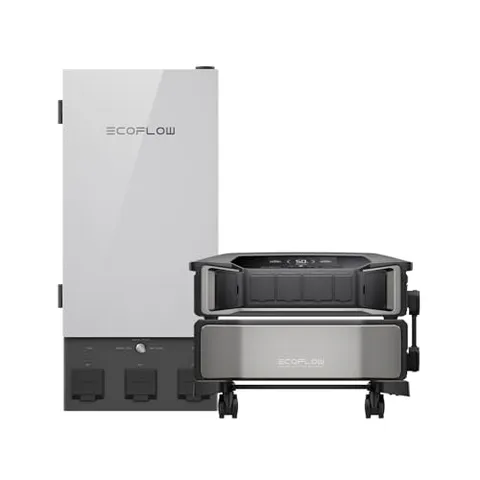
EcoFlow DELTA Pro Ultra Portable Power Station
Best PremiumPremium

4. EcoFlow DELTA Pro Ultra Portable Power Station

EcoFlow

$3,599–$5,999

A silent, expandable battery-and-solar system that can grow from a single 6kWh unit to a whole-home power plant, accepting up to 16.8kW of solar input. For off-gridders building toward energy independence rather than feeding an engine, this is the centerpiece.

Best for: Off-grid homes going solar-first and wanting silent, expandable whole-home backup

Completely silent, zero emissions, runs indoors and overnight · 6kWh base scales to 90kWh with 7,200W output (up to 21,600W stacked) · Massive solar input and LiFePO4 cells for long cycle life with online UPS

Very expensive once you add batteries and panels · Needs solar or a charging source to be a true off-grid solution, not just a battery

Sources: ecoflow.com, amazon.com, us.ecoflow.com

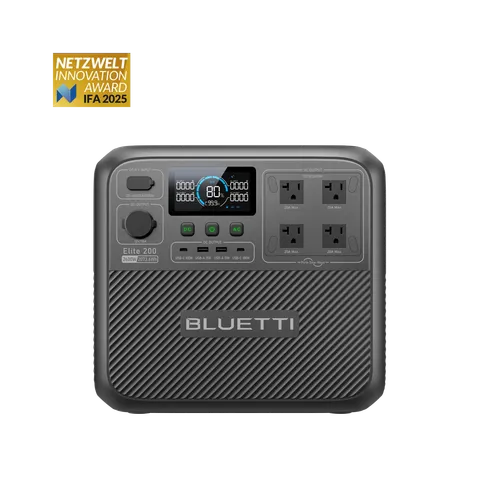
BLUETTI Elite 200 V2 Portable Power Station
Mid-range

5. BLUETTI Elite 200 V2 Portable Power Station

BLUETTI

$699–$999

A 2,073Wh LiFePO4 power station that hits the sweet spot for daily off-grid living: silent power for lights, electronics, and a fridge, fast solar recharge, and a 6,000+ cycle battery. Light enough at ~48 lb for one person to reposition with the sun.

Best for: Small cabins and off-grid daily use wanting quiet solar power without an engine

Silent, emission-free LiFePO4 with 6,000+ cycle lifespan · 2,600W output (3,900W lifting) covers most cabin appliances · Up to 1,000W solar input recharges fast; genuinely portable at ~48 lb

~2kWh won't run heavy loads or a whole house for long · Not expandable like the larger AC200L; add panels for real off-grid use

Sources: bluettipower.com, amazon.com, backuppowerhub.com, solarreviews.com

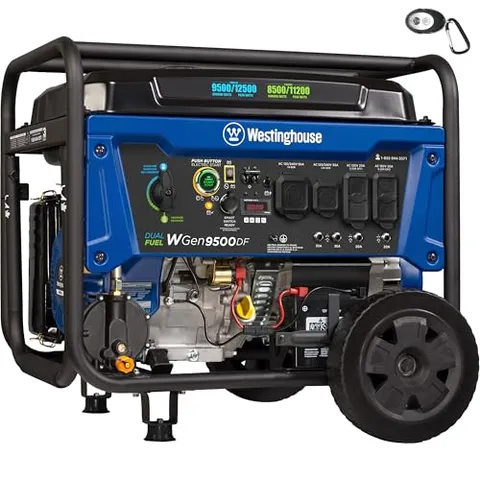
Westinghouse WGen9500DF Dual Fuel Portable Generator
Mid-range

6. Westinghouse WGen9500DF Dual Fuel Portable Generator

Westinghouse

$899–$1,199

A proven 12,500-peak/9,500-running-watt dual-fuel workhorse with remote key-fob start and a strong runtime, sitting just below the DuroMax in capacity at a friendlier price. A dependable whole-home backup that's been a best-seller for years.

Best for: Homeowners wanting big dual-fuel backup at a lower price than the 13kW class

12,500 peak / 9,500 running watts on gas, dual-fuel ready · Remote key-fob and push-button electric start · Up to 12-hour runtime, transfer-switch ready, GFCI outlets

Heavy open-frame unit; loud at load · Drops to 8,500 running watts on propane

Sources: amazon.com, westinghouse.com, generatorbible.com

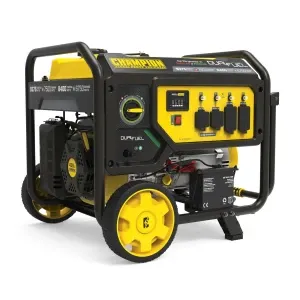
Champion 100891 7500-Watt Dual Fuel Portable Generator
Mid-range

7. Champion 100891 7500-Watt Dual Fuel Portable Generator

Champion

$899–$1,099

A mid-size dual-fuel open-frame generator with Champion's cold-start technology, Intelligauge monitoring, and a reputation for lifetime tech support. A sensible step up from inverter units when you need to run a pump and major appliances but don't need a full 13kW.

Best for: Cabins and rural homes needing solid mid-range power with strong support

9,375 starting / 7,500 running watts handles most off-grid loads · Cold-start technology and Intelligauge metering · Dual-fuel out of the box with 3-year warranty and lifetime tech support

~205 lb open-frame unit, loud at load · Lower wattage on propane than gas

Sources: generatortools.com, generatorbible.com, championpowerequipment.com

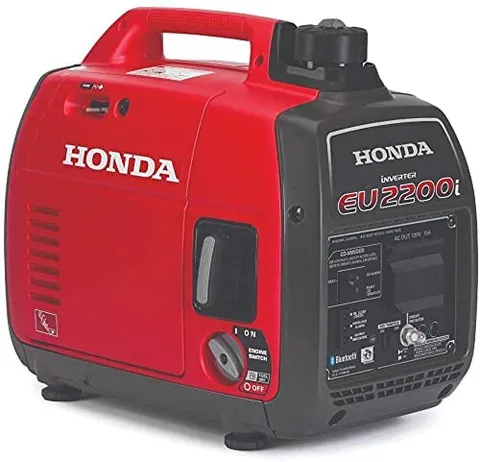
Honda EU2200i Super Quiet Inverter Generator
Mid-range

8. Honda EU2200i Super Quiet Inverter Generator

Honda

$1,099–$1,199

The benchmark for quiet, reliable portable power. Gas-only and just 2,200 watts, but Honda's legendary starting reliability and 48–57 dBA whisper make it the unit off-gridders trust to start after months in the shed, ideal as a quiet companion to a larger generator.

Best for: Off-gridders who value rock-solid reliability and silence in a portable unit

Exceptionally reliable starting, even after long storage · Very quiet (48–57 dBA) and fuel-efficient at light loads · Light at 47 lb; parallel-capable to double output; clean inverter power

Gas-only, no propane option for long-term fuel storage · Premium price per watt; not sold in California

Sources: amazon.com, powerequipment.honda.com

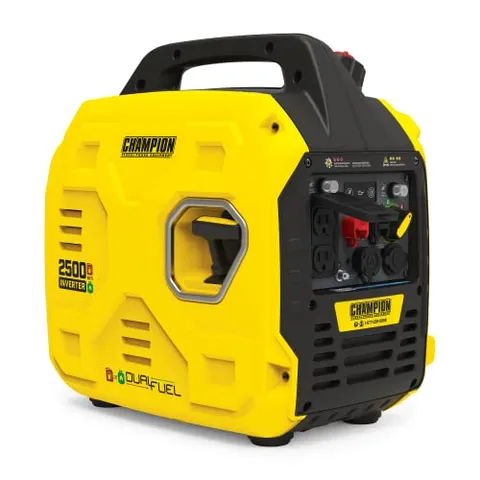
Champion 201183 2500-Watt Dual Fuel Inverter Generator
Best BudgetBudget

9. Champion 201183 2500-Watt Dual Fuel Inverter Generator

Champion

$429–$549

An ultralight 39-lb dual-fuel inverter with CO Shield auto-shutoff that you can carry one-handed to a remote cabin or tuck in a truck bed. On propane it runs up to 34 hours at quarter load, remarkable economy for the money.

Best for: Small cabins, hunting camps, and anyone needing light, quiet, affordable backup

Ultralight (~39 lb) and very quiet (~53 dBA) · Dual-fuel with up to 34-hour propane runtime at 25% load · CO Shield carbon-monoxide auto-shutoff; clean inverter power

1,850 running watts only covers lights, electronics, and a small fridge · Recoil start only on this size

Sources: amazon.com, championpowerequipment.com, generatorbible.com

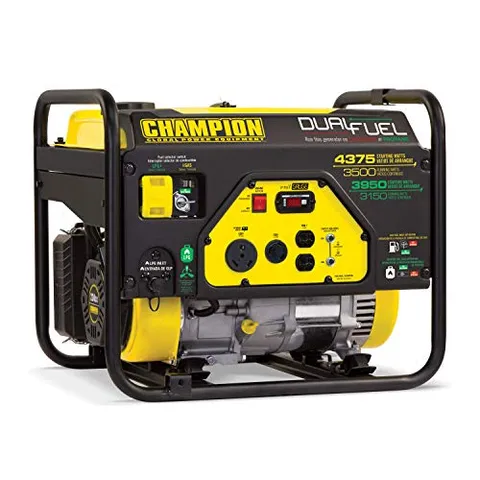
Champion 100307 4375/3500-Watt Dual Fuel RV Ready Portable Generator
Budget

10. Champion 100307 4375/3500-Watt Dual Fuel RV Ready Portable Generator

Champion

$429–$549

A no-frills, affordable dual-fuel open-frame generator with an RV-ready outlet, enough to run a small cabin's essentials or a camper on either gas or propane. The dependable budget workhorse when you need more muscle than an inverter but not a big-box price.

Best for: Budget-minded cabin and RV owners needing flexible essential-circuit power

4,375 starting / 3,500 running watts on a budget · Dual-fuel with RV-ready TT-30R outlet · Simple, proven design with Champion's lifetime tech support

Conventional (non-inverter) power, not ideal for sensitive electronics · Recoil start; louder than an inverter unit

Sources: amazon.com, norwall.com

How we choose

We ranked these by overall fitness for off-grid and rural use (fuel flexibility, real-world runtime and efficiency, noise, cold-start reliability, serviceability, and value), not by price or wattage alone, then sorted them into three tiers: budget (roughly under $600, for a single-circuit cabin, tools, or a partial backup), mid (roughly $700–$1,800, the sweet spot for whole-cabin or essential-circuits backup), and premium (roughly $1,800 and up, for whole-home power, tri-fuel versatility, or silent solar/battery systems). Picks are based on manufacturer specifications, hands-on and lab reviews from independent outlets, and aggregated owner feedback from major retailers; we read the one- and two-star reviews as carefully as the five-star ones. We accept no payment from any manufacturer to be included or ranked: affiliate links may earn us a commission if you buy, but they never influence placement, and several top picks are models no brand pays us to feature.

Common questions

Add up the running watts of everything you'd run at once, then leave headroom for motor-start surge (well pumps, fridges, and AC compressors can draw 2–3x their running watts for a second). A small cabin with lights, a fridge, and a laptop is happy on 2,000–3,500 running watts. A full house with a well pump, deep freeze, furnace blower, and a window or mini-split AC usually wants 7,500–10,500 running watts, which is why the 9,500W–13,000W dual-fuel units are the off-grid default. Bigger isn't free: an oversized generator burns more fuel at light loads, so many people pair a small inverter for daily use with a large unit for peak demand.

For most off-grid homeowners, dual-fuel (gas + propane) is the practical baseline: propane stores for years without going stale, which solves the single biggest problem with keeping fuel at a remote property. Tri-fuel adds natural gas, which is only worth paying for if you have a NG line or a large on-site tank. Solar/battery power stations are the quietest, lowest-maintenance option and increasingly the daily-driver for off-grid life, but you still want a fuel generator as the bad-weather backstop, because no battery survives a week of overcast January.

Gasoline degrades, even with stabilizer it's questionable after 6–12 months, and stale fuel gumming a carburetor is the number-one reason a stored generator won't start when you finally need it. Propane stores essentially forever, burns cleaner (less engine wear and fewer oil changes), and is easy to stockpile in 20-lb or 100-lb tanks. The trade-off is roughly a 10% drop in wattage on propane versus gas, and harder starting in deep cold. For a generator that sits unused for months between uses, propane's storage stability is often worth more than the wattage you give up.

Yes: units in the 9,500W–13,000W class are 'transfer-switch ready' and can run most of a home's essential circuits. To wire one into your house safely and legally you need a manual transfer switch or an interlock kit installed by a licensed electrician; never backfeed power through a regular outlet, which can electrocute a lineman and damage your equipment. Budget a few hundred dollars and a permit for the transfer switch on top of the generator price.

Run it on propane to sidestep stale-fuel problems, or if you must store gas, use a stabilizer and run the carb dry before storage. Exercise the unit under load for 20–30 minutes every month or two, change the oil on schedule (engine generators need it; battery units don't), and store a spare spark plug, oil, and an air filter on-site since you can't run to the store. In cold climates, a cheap engine-block or battery warmer dramatically improves winter starting, several owners of large dual-fuel units report hard cold-weather starts that a warmer fixes.

Inverter generators (the Honda EU2200i, Champion 2500W, Westinghouse iGen4500) run 48–61 dBA, conversation level, and throttle down at light load, which is why they're the right call near a cabin you actually sleep in. Open-frame 'workhorse' units (DuroMax, big Westinghouse and Champion models) are noticeably louder at 70+ dBA and run at full RPM regardless of load; site them away from the house and downwind. Battery/solar stations are effectively silent. Manufacturer dBA figures are measured at 23 feet. Expect it to sound louder up close.

Some links are affiliate links, and we may earn a commission at no extra cost to you. It never affects our rankings.

In your pocket

Take your land with you.

Free, no account needed. Planning tools, public-land maps, and field tools built for off-grid country.

  • Public-land boundaries in your pocket. No subscription

  • Walk a boundary with GPS and see its real shape

  • Plan the route out to the parcel and save it

  • GPS tracking that keeps recording where signal never reaches

Nearby places standing on the real terrain in 3D in the Off Grid Hubs app

Ready to launch?

Ready to give your community
better tools?

Free GPS parcel maps, fire monitoring, road reports, and community tools, branded for your community and ready in about a week.