Skip to content
Top-rated outdoor gear, ranked

Best Of 2026

Best Off-Grid Wood Stoves of 2026

Our top 10 picks, independently ranked. Budget to premium.

Updated

For an off-grid homeowner, a wood stove isn't a cozy accessory, it's primary infrastructure. When the sun doesn't shine on the solar array for a week, when the generator runs dry, and when the nearest utility line is miles away, a stove full of dry firewood is what keeps the pipes from freezing and the cabin livable. That changes how you should shop. The features that matter for an off-grid or rural cabin are not the same ones a suburban buyer chases: you want long, steady burn times so you're not feeding the firebox every two hours (and not waking at 3 a.m. to a cold house), genuine thermostatic or air-control that works with zero electricity, high efficiency so every cord you cut and haul goes further, and bombproof construction that survives decades of hard rural use.

This guide spans the full market on purpose, something a single Amazon listing page will never do for you. At the low end are honest, EPA-exempt or entry-EPA stoves under $700 that will heat a one-room cabin or hunting shack for the cost of a weekend's groceries. In the middle sit the workhorse small-to-medium stoves (the Drolets, the Jøtul classic, the purpose-built tiny-space stoves), that most full-time cabin dwellers actually end up buying. At the top are the cast-iron and thermostatic stoves that deliver 20-to-30-hour burns and last a lifetime, the kind of purchase you make once for a house you intend to grow old in.

Every model below is a real product you can buy in 2026, chosen to help you understand where you sit on the price-versus-capability curve rather than to push you toward one SKU.

At a glance

#ProductPrice
1$1,300–$1,550
2
Princess 32

Blaze King

$3,200–$4,200
3
Super 27

Pacific Energy

$2,000–$2,600
4
F 602 V3

Jøtul

$1,100–$1,500
5
Spark II

Drolet

$1,000–$1,300
6
Alderlea T5 LE

Pacific Energy

$3,000–$3,900
7
Dwarf 4kW

Tiny Wood Stove

$1,690–$2,000
8
CB-2000 Grizzly

Cubic Mini Wood Stoves

$580–$700
9$800–$1,100
10$500–$700
Escape 1500
Best OverallMid-range

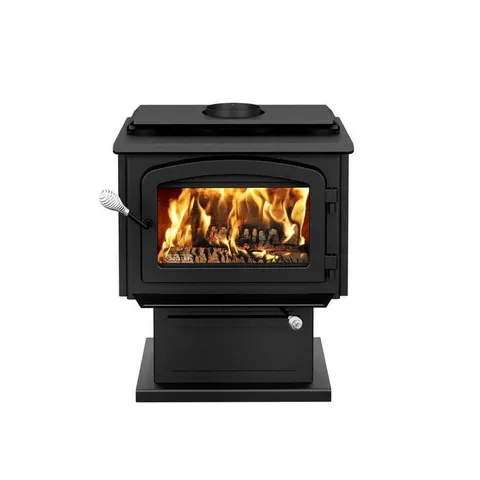
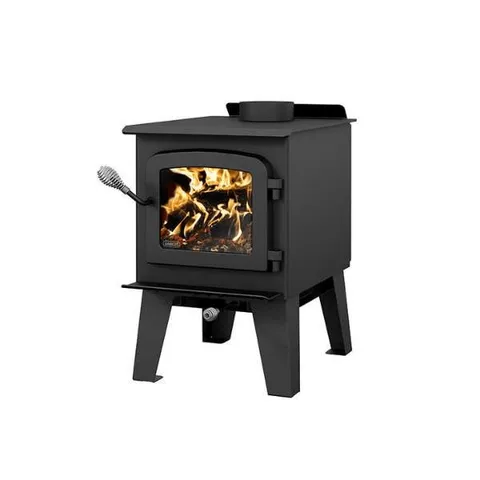
1. Escape 1500

Drolet

$1,300–$1,550

The clean-burning, well-built medium stove that hits the off-grid sweet spot: enough firebox to heat a real cabin, EPA efficiency that stretches your woodpile, and a price most homesteaders can stomach.

Best for: The all-around cabin or rural-home owner who wants the most capable stove for the money.

65,000 BTU heats up to ~1,500–1,800 sq ft, covering most cabins · Very clean burn (low g/hr) means less creosote and less wood · Heavy 5/16" steel top, side shields reduce clearances · Qualifies for the 30% federal wood-stove tax credit

~7 hr burn is good but not a true overnight long-burner · Best heat distribution relies on the optional blower (needs power)

Sources: drolet.ca, thecabindepot.com, hvacdirect.com

Princess 32
Best PremiumPremium

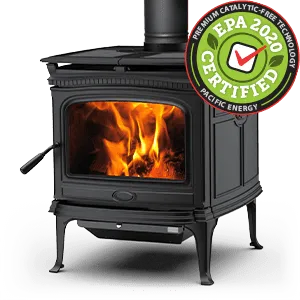
2. Princess 32

Blaze King

$3,200–$4,200

The off-grid purist's stove. Its catalytic, fully mechanical thermostat holds a 2.9 cu ft load for up to 30 hours with no electricity: load it, leave for the day, come home to a warm house.

Best for: Full-time off-grid homeowners who want the longest unattended burns money can buy.

Up to ~30 hours of burn on a single load · Thermostatic control needs zero electricity, ideal off-grid · Exceptional ~82% efficiency and very low 0.4 g/hr emissions · Heats up to ~2,500 sq ft for a full-time home

Expensive up front and largely dealer-sold · Catalytic combustor needs periodic care and eventual replacement

Sources: pellethead.com, woodheat.com, woodlist.us

Super 27
Editor's PickPremium

3. Super 27

Pacific Energy

$2,000–$2,600

A bulletproof, no-nonsense workhorse with a removable baffle, lifetime warranty, and a reputation for outlasting its owners, the stove cabin veterans recommend without hesitation.

Best for: Rural owners who want one stove that will simply run, hard, for decades.

Heats up to ~2,000 sq ft with strong radiant + convective heat · Extended Burn Technology gives long, economical burns without power · Famously durable; easy-to-service baffle and limited lifetime warranty

An 'easy breather', runs hot fast and rewards careful air control · Dealer-sold, so pricing and availability vary by region

Sources: pacificenergy.net, hearth.com

F 602 V3
Mid-range

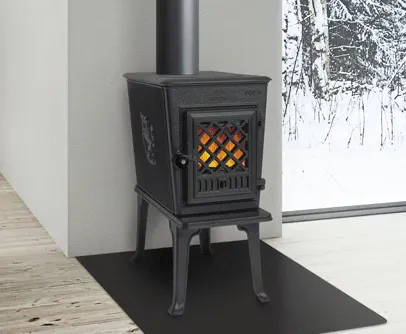
4. F 602 V3

Jøtul

$1,100–$1,500

The best-selling wood stove ever made, now EPA-certified, a compact Norwegian cast-iron classic that throws gentle, steady heat and looks the part in any cabin.

Best for: Small-cabin and tiny-home owners who want craftsmanship and a manageable size.

Compact footprint perfect for small one-room cabins (~800 sq ft) · Cast-iron build radiates even heat and is beautifully made · Time-proven design with over a million units sold worldwide

Small firebox means ~5 hr burns and frequent feeding · Needs a careful startup routine to run its best

Sources: jotul.com, tinywoodstove.com, rockymountainstove.com

Spark II
Best ValueMid-range

5. Spark II

Drolet

$1,000–$1,300

One of the most compact EPA-certified stoves on the market, delivering big clean-burn heat for small spaces at an entry-level price that still earns the tax credit.

Best for: Budget-minded buyers who still want a modern, clean-burning certified stove.

Up to 45,000 BTU from a tiny 1.55 cu ft firebox · EPA-certified at 1.8 g/hr, 75% efficiency, tax-credit eligible · Certified for mobile-home and alcove installs, flexible siting

Small firebox limits burn time to ~5 hours · Better suited to small cabins than whole-home heating

Sources: drolet.ca, thecabindepot.com, buildwithrise.com

Alderlea T5 LE
Premium

6. Alderlea T5 LE

Pacific Energy

$3,000–$3,900

A cast-iron-clad version of Pacific Energy's proven firebox with a concealed cast-iron cooktop, premium heat plus a genuine backup cooking surface for off-grid kitchens.

Best for: Off-grid homeowners who want a premium stove that doubles as a stovetop.

Cast-iron jacket gives soft, even radiant heat and a lift-up cooktop · Same trusted Pacific Energy baffle and long-burn engineering · Heats a large cabin/home (~2,000 sq ft) and looks superb

Premium price for the cast-iron styling and cooktop · Heavier and dealer-installed; not a casual DIY drop-in

Sources: pacificenergy.net, hearth.com, luxuryfire.com

Dwarf 4kW
Mid-range

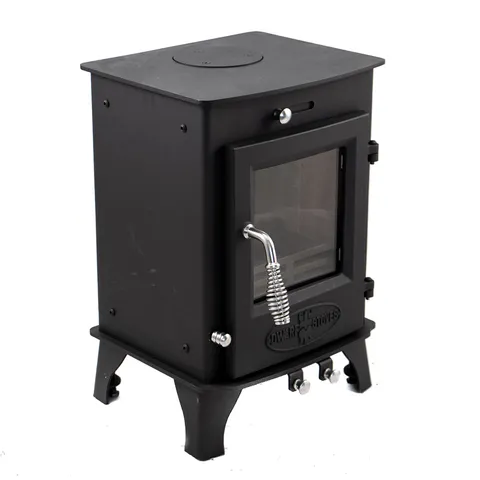
7. Dwarf 4kW

Tiny Wood Stove

$1,690–$2,000

A rugged little stove purpose-built for tiny off-grid and mobile spaces, with top-or-rear flue exit and a lifetime parts guarantee that's tailor-made for remote owners.

Best for: Tiny-home, yurt and mobile off-grid dwellers who need a compact, serviceable stove.

Designed for 300–400 sq ft tiny homes, yurts, skoolies and rigs · Rear-exit option frees the top for cooking; flexible installs · 'Built for Life' free replacement of bricks, glass and gaskets

Not EPA-certified, which can matter for permits/insurance · Small firebox needs frequent feeding

Sources: tinywoodstove.com, thewilddrive.com

CB-2000 Grizzly
Best BudgetBudget

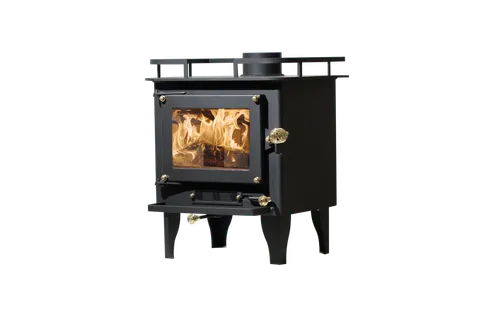
8. CB-2000 Grizzly

Cubic Mini Wood Stoves

$580–$700

The go-to micro-stove for the smallest off-grid spaces: a charming, genuinely tiny secondary-combustion stove that heats a 200–400 sq ft cabin, boat or van for well under $700.

Best for: Boats, vans and the smallest one-room off-grid cabins on a tight budget.

Tiny 13" x 15" footprint fits the smallest cabins and rigs · Secondary combustion burns clean and dries out cabin humidity · Inexpensive and easy to install yourself

Very small firebox means frequent reloading, no overnight burn · Accessories (flue, shields, floor pad) add meaningfully to the cost

Sources: cubicminiwoodstoves.com, stoveshq.com, tinyhouseblog.com

Defender TR001
Budget

9. Defender TR001

Vogelzang

$800–$1,100

An affordable EPA-certified steel stove that punches above its price, quick, strong heat for a small cabin or shop with widely available parts and big-box availability.

Best for: Cost-conscious owners heating a small cabin, cabin loft or shop.

EPA-certified and over 75% efficient at a budget price · Up to 68,000 BTU heats ~1,200 sq ft, with included blower · Easy to find and easy to operate

Steel body and modest firebox burn through wood faster than cast iron · Fit and finish are entry-level

Sources: woodstovepro.com, iwae.com, lowes.com

Logwood 2469E
Budget

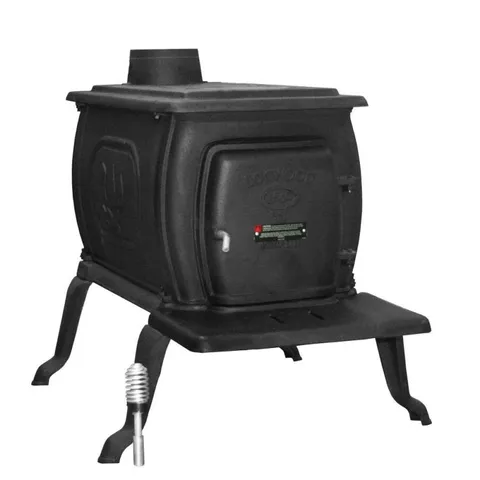
10. Logwood 2469E

US Stove

$500–$700

A rustic, heavy cast-iron stove and one of the cheapest ways to put serious heat in a remote cabin or hunting camp: simple, tough, and proudly low-tech.

Best for: Hunting camps, shops and rough cabins where low cost and brute heat win.

Cast-iron construction holds and radiates heat well for the price · Big heat (rated up to ~1,600 sq ft) and accepts long 27" logs · Among the most affordable real stoves you can buy

EPA-exempt design burns dirtier and less efficiently than certified stoves · No long-burn or thermostatic control; basic gaskets and fit

Sources: iwae.com, hvacdirect.com, vogelzang.com

How we choose

We selected stoves that are genuinely available to U.S. buyers in 2026 and weighted them on the criteria that matter specifically off-grid: burn time and overnight hold, whether the air control or thermostat functions without electricity (no blower dependence), real-world heating efficiency, firebox capacity matched to typical cabin square-footage, build quality and parts availability, and value for money. We deliberately spread picks across three tiers. Budget (roughly under $1,000) covers cast-iron and steel stoves for single rooms, shacks and shoulder-season heat, capable but feed-hungry. Mid ($1,000–$2,000) is where most off-grid cabins land: clean-burning EPA-certified small and medium stoves with 5–7 hour burns and tax-credit eligibility. Premium ($2,000+) buys the long-burn cast-iron and thermostatic stoves built to heat a full-time home for decades. Rankings reflect overall recommendation for an off-grid/rural reader, not price. We have no relationship with any manufacturer, accept no payment for placement, and the order would not change for a paying brand; retailer links may be affiliate links but they do not influence selection or rank.

Common questions

Legally it depends on your location and whether the cabin is a permanent dwelling, some EPA-exempt stoves (like the US Stove Logwood) are sold for non-residential or specific uses, and rural counties often have looser enforcement than cities. But practically, you want an EPA-certified secondary-combustion or catalytic stove regardless: they reburn the smoke, which means dramatically more heat per log, far less creosote in your chimney (a real fire risk in a remote cabin), and longer burns. The efficiency gain alone pays you back in less wood cutting and hauling.

The stove itself does not, the fire and the air-control draft are purely mechanical, which is exactly why wood heat is the gold standard for off-grid. The catch is the optional blower fan many stoves offer to push heat into the room; those need power. For a true off-grid build, choose a stove that heats well by radiation and convection on its own (cast iron excels here), and treat the blower as a nice-to-have you can run off your battery bank, not a requirement. Thermostatic stoves like the Blaze King regulate output mechanically with no power at all.

If you're heating a weekend cabin you tend while you're awake, a 5-hour stove is fine. For a full-time off-grid home where you want to sleep through the night and not relight from cold coals every morning, look for 8-plus hours of real burn, and if you want to leave for a workday or a winter trip into town and come back to a warm house, a thermostatic long-burner (20–30 hours) is worth the premium. Burn time scales with firebox size, so don't undersize the stove just to save money up front.

A common rule of thumb is about 20 BTU per square foot, so a 1,500 sq ft space wants a stove rated around 30,000 BTU. But cabin reality matters more than the math: a tight, well-insulated 800 sq ft cabin in a mild climate needs far less than a drafty old farmhouse the same size in Montana. Err slightly small rather than large: an oversized stove run choked down all winter smolders, burns dirty, and gluts your chimney with creosote, while a right-sized stove run hot burns clean and efficiently.

Many off-grid owners do, but the chimney is where DIY goes wrong and where fires start. Follow the manufacturer's clearance-to-combustibles specs exactly, use proper double- or triple-wall insulated Class A pipe through the roof or wall, install a floor heat shield, and keep a fire extinguisher and a chimney brush on hand. Even off the grid, check whether your stove purchase needs to be on the books for insurance, an uncertified or improperly installed stove can void a homeowner's policy.

For off-grid living it's a genuinely useful redundancy: being able to simmer a pot, boil water, or keep coffee warm on the stove top means your heat source doubles as a backup kitchen when propane runs low. Most flat-top steel and cast-iron stoves give you usable cooking surface; the Pacific Energy Alderlea's cast-iron top and the small purpose-built stoves with rear-exit flues (which free up the top) are particularly cook-friendly. A dedicated wood cookstove is another route, but it heats less efficiently as a space heater.

Some links are affiliate links, and we may earn a commission at no extra cost to you. It never affects our rankings.

In your pocket

Take your land with you.

Free, no account needed. Planning tools, public-land maps, and field tools built for off-grid country.

  • Public-land boundaries in your pocket. No subscription

  • Walk a boundary with GPS and see its real shape

  • Plan the route out to the parcel and save it

  • GPS tracking that keeps recording where signal never reaches

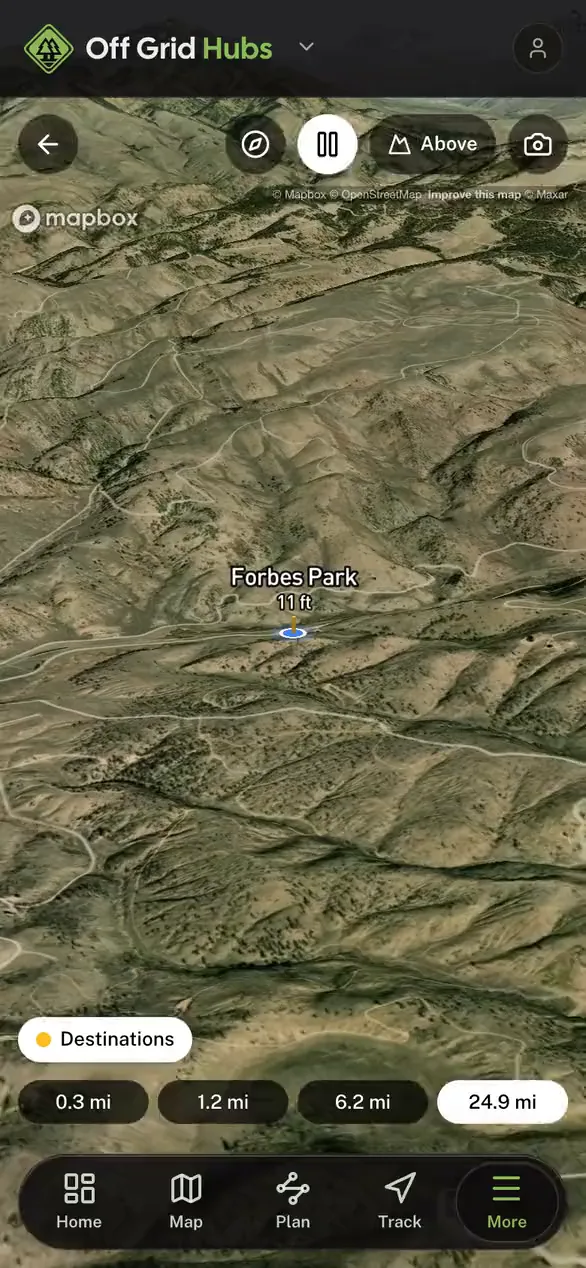
Nearby places standing on the real terrain in 3D in the Off Grid Hubs app

Ready to launch?

Ready to give your community
better tools?

Free GPS parcel maps, fire monitoring, road reports, and community tools, branded for your community and ready in about a week.