Choosing between propane and wood heat is often the first major infrastructure decision an off-grid resident faces after addressing power and water. Both systems work, both have serious limitations, and both require you to understand your climate, your tolerance for manual labor, and how much you're willing to spend upfront. This isn't a choice where one option universally wins, it's about matching your priorities to your property and lifestyle.
Understanding Your Heating Options
Propane and wood are the two reliable heating sources for cabins without grid access, and they represent fundamentally different philosophies. Propane is a liquid hydrocarbon gas stored in a tank on your property. You order refills from a distributor, which arrive by truck. It burns in a furnace, wall heater, or stove without producing ash or smoke. But "clean" depends entirely on venting: a properly vented propane appliance exhausts its combustion products, including carbon monoxide, outdoors, while an unvented ("vent-free") propane heater dumps them, plus roughly a pint of water vapor an hour, directly into the room. That makes vent-free units genuinely risky in a tight, sealed cabin. A well-installed vented system is clean, controllable, and requires almost no daily attention.
Wood heat is manual and tangible in every way. You source, split, stack, dry, and burn wood yourself. A wood stove or fireplace insert produces visible flames and heat output you can watch and adjust. The system requires daily tending during heating season: loading wood, adjusting vents, cleaning ash. For some residents, this is a valued ritual; for others, it's a burden that wears thin by February. The critical skill is not burning wood but securing dry, seasoned wood before winter arrives, which determines whether your system performs or fails.
BTU Efficiency & Heating Capacity
Both systems deliver heat, but they measure and deliver it in very different ways. Propane furnaces and heaters are rated by BTU output and deliver consistent, predictable warmth on demand. A 40,000 BTU propane furnace will heat a 1,200–1,500 square-foot cabin efficiently, assuming reasonable insulation and climate. Propane burns at a fixed rate once ignited; you control temperature via thermostat, and the system maintains it automatically. Efficiency matters, modern propane furnaces run 80–95% efficient, meaning most of the fuel's energy converts to usable heat rather than escaping up the chimney.
Wood stoves operate very differently. A modern EPA-certified wood stove might have a nominal output of 50,000–65,000 BTUs, but that number is theoretical and depends entirely on wood quality, moisture content, and operator technique. Wet or unseasoned wood performs poorly, losing 20–40% of potential heat to the energy cost of drying the wood inside the stove. Properly seasoned hardwood, dried at least a year to below 20% moisture content, delivers the rated BTU output and burns cleaner and longer. A single load of quality wood lasts 8–12 hours depending on stove size and weather; a load of wet wood might burn in 4 hours while delivering half the heat. This variability is why many off-gridders who rely on wood heat keep a propane backup for deep cold snaps or when their wood supply falters.
Cost Comparison: Fuel, Installation & Maintenance
Propane's cost structure is straightforward: installation of a furnace, venting, and tank, followed by recurring fuel costs. A propane furnace system for a cabin-sized space runs $3,000–$6,000 installed. A 500–1,000-gallon tank costs $1,200–$2,500. Refill costs vary by region and market conditions, typically $2.50–$4.50 per gallon, and a cabin heating through a cold winter consumes 300–600 gallons depending on outside temperature, insulation, and heating setpoint. That's roughly $750–$2,700 in annual fuel, plus occasional furnace service ($200–$400 annually).
Wood stove installation is cheaper upfront. A quality EPA-certified stove costs $1,500–$3,500; chimney installation and inspection run another $1,500–$3,000, though you may already have a usable chimney. Total initial cost: $3,000–$6,500, similar to propane. The difference is fuel. If you source and split wood yourself on your property or nearby, labor dominates cost, your time, but material cost is minimal. If you buy cordwood, expect $200–$400 per cord depending on region, species, and whether it's pre-split and seasoned. A cabin heating primarily with wood burns 5–10 cords per winter, costing $1,000–$4,000 in fuel. Add a chainsaw, splitter, and storage shed if you don't have them, and you're investing several thousand dollars more in supporting infrastructure.
Propane systems require annual inspection and furnace servicing; wood stoves require annual chimney cleaning and inspection. Both are mandatory for safety and efficiency. Over 10 years, propane's fuel costs are generally predictable and stable; wood's labor cost is massive but invisible if it's your own effort, or it becomes prohibitive if you're hiring someone to split and stack for you.
Safety, Regulations & Long-Term Viability
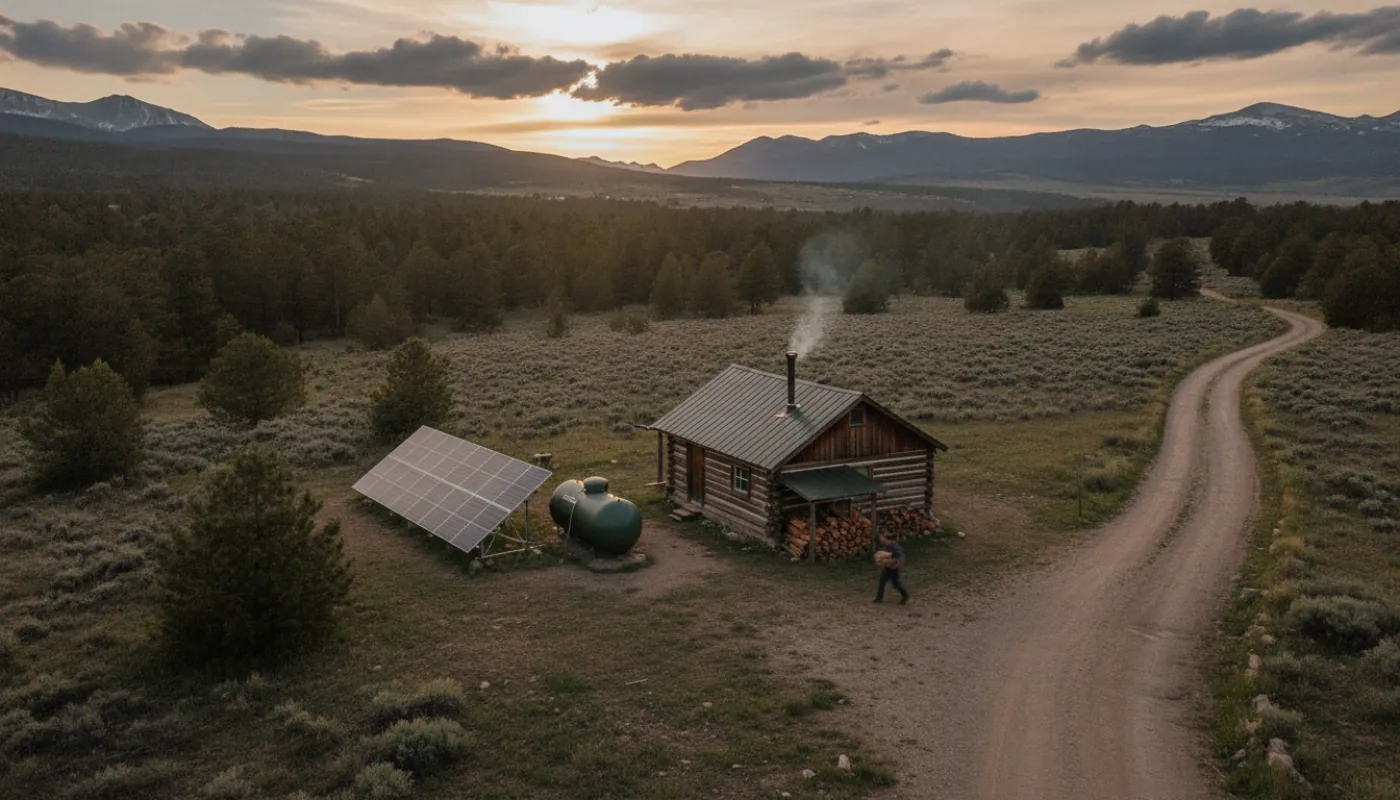
Both systems are safe when installed correctly and maintained consistently, and both demand a working carbon monoxide detector, non-negotiable with any combustion heater. Propane's safety hinges on venting: a sealed, outdoor-vented furnace is the right call, while an unvented propane heater burns room oxygen and releases carbon monoxide indoors and should never run in a closed space or while you sleep. Propane tanks themselves demand respect: they must be installed by licensed contractors in many jurisdictions, inspected annually, and kept clear of damage and ice buildup. Propane can leak, and because it's heavier than air it pools in low spots (floors, basements, pits); modern regulators and safety shutoffs make leaks rare, but the risk is real. Propane also creates a long-term dependency: you rely on truck access to your property. In severe weather or when roads wash out, your delivery might be delayed, and running out of propane mid-winter is a genuine threat.
Wood stove safety centers on creosote buildup in the chimney, a flammable byproduct of wood combustion that accumulates faster in cooler chimneys or when burning wet wood. Annual chimney sweeping prevents dangerous buildup and chimney fires. Modern EPA-certified stoves are designed to minimize creosote, but the responsibility is on you to maintain the stove, keep the chimney clean, and never leave a hot stove unattended. A wood stove also needs proper clearance to combustibles (an unlisted stove requires 36 inches to nearby walls and furniture (less only with a code-compliant air-gapped heat shield), and a listed stove per its label), and, like propane, a working carbon monoxide detector, since a restricted or back-drafting flue can push CO into the room. Most off-grid residents who heat with wood develop a deep respect for fire and take safety seriously; fatalities are rare in well-maintained systems.
Regulatory landscape varies by county. Some jurisdictions have air-quality restrictions that limit or prohibit wood-burning appliances, especially during winter months. Check local regulations before committing to wood. Propane regulations focus on tank placement, venting, and installation credentials, they're generally consistent across regions. Long-term viability of wood is contingent on having access to trees and the physical ability to harvest, split, and stack. As you age, this becomes harder; propane scales with you.
Which System Makes Sense For Your Cabin
Choose propane if you value simplicity, control, and predictability. Propane suits people who don't enjoy manual labor, who want a thermostat to do the thinking, or who live in harsh winters and can't risk running out of heat mid-January. It's also the choice if your property is isolated or inaccessible for long periods, you can set a propane system to maintain a baseline temperature automatically. Propane is reliable, familiar, and burns without soot or mess. The tradeoff is cost and dependency on fuel delivery logistics.
Choose wood if you have reliable access to seasoned firewood, if you enjoy the ritual and control of tending a fire, and if you can tolerate the daily demands of heating season. Wood works best as a primary heat source in regions with moderate winters or as a backup to propane or solar. It's also an excellent choice if you have a woodlot on your property and can sustainably harvest your own fuel. Many off-gridders find the self-reliance of wood heating aligned with their broader philosophy of land stewardship, even if it requires hard physical work.
For most cabins, a hybrid approach makes sense: propane or electric baseboard as the primary system for winter heating, paired with a wood stove in the main living space for ambiance and cost reduction. This lets you maximize wood when the stove is actively occupied while maintaining comfort and safety through the system when no one is home. Size your propane tank or electric capacity to heat the cabin adequately on its own, treating wood as a supplement rather than relying on it to function.