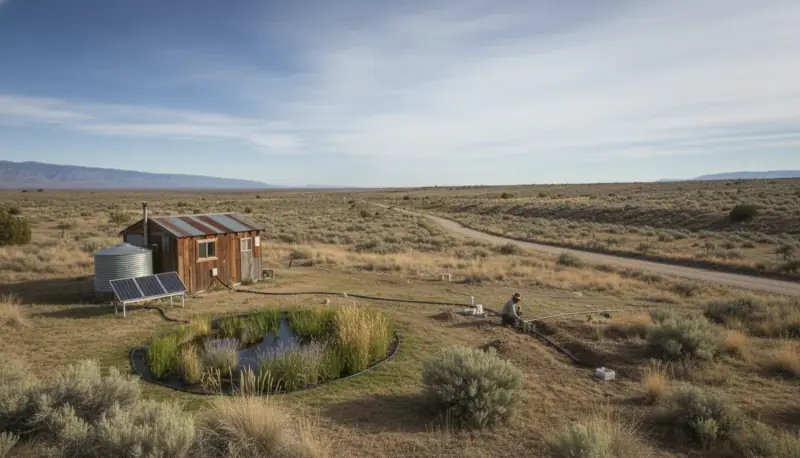
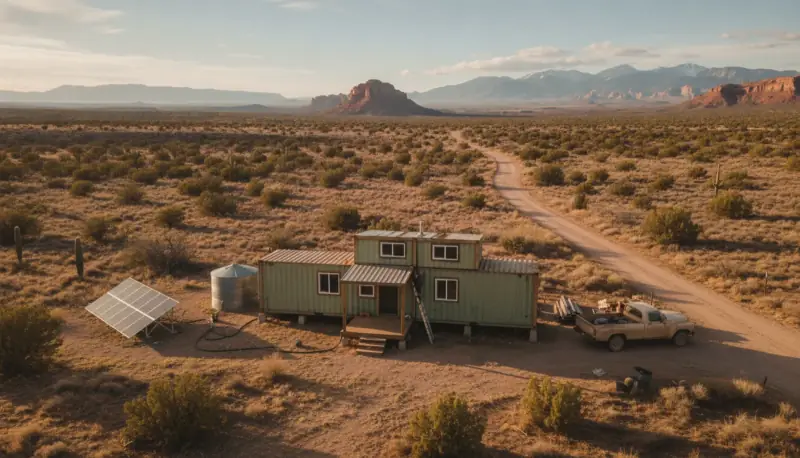
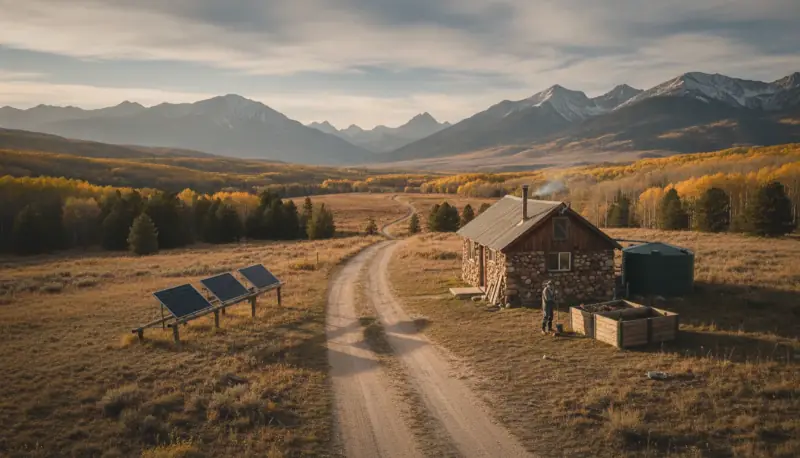
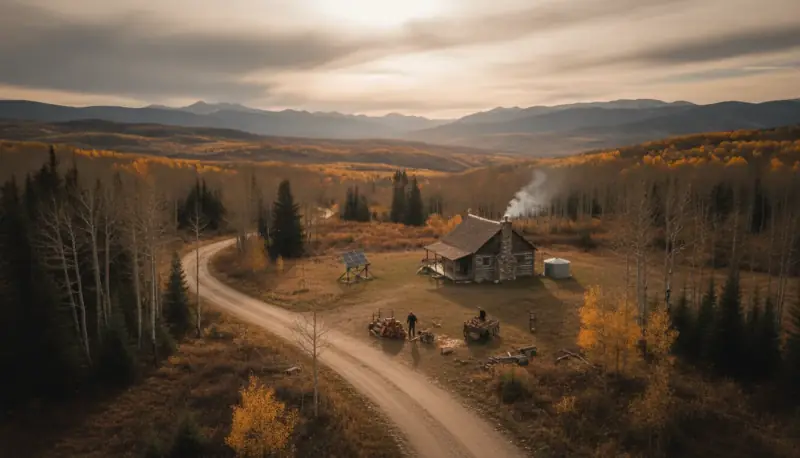
Water access is the single most critical infrastructure decision you'll make on off-grid property. Between a drilled well and a cistern, you're weighing reliability against flexibility, upfront cost against long-term independence, and soil conditions against climate. There's no universally "right" answer: it depends on your location, budget, climate, and how much water autonomy you actually need. Many off-grid properties use both systems in tandem, each filling a different role. This guide compares the two options side-by-side so you can make an informed choice based on your site's specific constraints and your property's water demands.
Understanding Drilled Wells
A drilled well taps groundwater from below the water table, using a pump to bring it to the surface. Depths vary wildly depending on geography, some wells hit water at 25 feet, others require drilling 300+ feet to reach a reliable aquifer. The depth is determined by local hydrology, not by you; you drill until you hit water or hit refusal. Once installed, a well provides on-demand access to water 24/7 without weather dependency. Well water is often clearer and cooler than surface or cistern water, but do not assume it's safe to drink as drawn: soil and rock don't remove dissolved arsenic, nitrate, or many bacteria, and the most dangerous well contaminants are invisible and tasteless. Any private well must be tested and, if needed, treated before you rely on it (see below).
Wells require a pump (a submersible for deeper wells, a jet pump for shallow ones, or a hand pump), electrical power (if you're using an electric pump), and a pressure tank to regulate flow. Maintenance is minimal if the well is properly sealed and the pump is sized right, annual water testing and occasional pressure-tank repairs are typical. A well can last 50+ years if maintained. The trade-off is that wells are expensive to install and risky: if the drilling company hits refusal before water, you've spent thousands with nothing to show for it. The lifespan and reliability depend heavily on water table stability in your region. Arid regions with declining water tables present long-term risk; areas with consistent rainfall and stable aquifers are much safer bets. Winter in cold climates requires frost protection below the freeze line, adding cost and complexity to the installation.
Understanding Cisterns
A cistern is a storage tank (usually 500 to 10,000+ gallons), that collects and holds water until you need it. It can be fed by rainwater (via roof gutters), truck delivery, or a combination. One thing to settle before you plan a rainwater cistern: check your state's rules. A few Western states restrict residential rainwater collection (Colorado, for example, caps it at two barrels / 110 gallons for outdoor, non-potable use only), so a large rainwater drinking cistern that's routine in one state can be illegal in another. Rainwater cisterns rely on precipitation; truck-delivered cisterns are fed by a water truck from a municipal source or a well owned by someone else. Most off-grid properties using cisterns combine rainwater with periodic truck fills to ensure year-round supply, especially in dry seasons.
A cistern's capacity is its primary constraint. A household using 50 gallons per day needs a tank sized to survive gaps between rain events or truck deliveries. In dry climates, that may mean a 5,000+ gallon tank. In rainy climates, 1,000–2,000 gallons may suffice. The water inside a cistern is exposed to light and sediment (unless the tank is opaque and properly sealed), so regular maintenance (straining, occasional cleaning, and water testing), is necessary to prevent algae and contamination. Cisterns are cheaper to install than wells: a basic tank, gutters, and plumbing can run $2,000–$8,000 depending on size. They're also predictable: you buy a tank in a known size, so no drilling risk. Maintenance is manual: you're responsible for monitoring water levels, arranging truck deliveries, and managing the system actively. The trade-off is dependence on rainfall or truck logistics, and the need to actively manage a finite resource.
Cost Comparison and Upfront Investment
Well drilling typically costs $3,000 to $15,000, depending on depth and local drilling rates. Drillers usually bill by the foot (~$25–$65 per foot, higher in granite), so the per-foot rate plus your expected depth is the number to compare across quotes. Shallow wells (25–50 feet) in areas with high water tables run $3,000–$6,000. Deep wells (200–300+ feet) in arid regions or areas with low water tables can exceed $15,000. After drilling, you'll pay another $1,500–$4,000 for pump installation, pressure tank, and wiring. Budget $5,000–$20,000 total for a functional well system. The gamble is pre-drilling: if you hit refusal, you've spent money with no asset to show for it.
A cistern system is more modular. A basic 1,500-gallon tank with gutters, filtration, and basic plumbing runs $2,500–$5,000. A 5,000-gallon system with overflow, backup power, and sediment filters costs $6,000–$10,000. Add truck delivery fees ($100–$200 per fill in rural areas) and the ongoing logistics cost becomes material over time. A well's upfront cost is higher, but if water table is accessible, the system pays for itself in 10–15 years of avoided truck deliveries and municipal water bills. The math shifts in arid regions where truck fills are frequent and water tables are deep. Conversely, in rainy areas with shallow water tables, a well pencils out faster. Many operators hedge by installing a modest cistern (1,500–2,000 gallons) for emergency reserves and dry-season top-ups, then drilling a shallow well if the water table permits, creating a hybrid system that costs more upfront but provides maximum resilience.
Water Table and Site Feasibility
Before you commit to a well, you need to know your water table depth. County USGS or state geological survey maps often show water table depths by region, but they're approximations. The gold standard is to ask your neighbors or consult a local well driller, they know the site's actual hydrology. If your property sits on a granite ridge and neighbors are drilling 400 feet, your well will be expensive. If you're in a valley with shallow groundwater, you're golden.
Soil composition matters too. Sandy or gravelly soils are easier to drill and filter water naturally. Clay or hardpan soils are harder to penetrate and may clog a well intake. A geotechnical report ($500–$1,500) can confirm what you're drilling into, but many off-grid buyers skip this and just drill, accepting the risk. For cisterns, the inverse applies: you need consistent rainfall or reliable truck access. NOAA climate normals for your area show annual precipitation. If your region averages 40+ inches per year and rain is distributed year-round, a cistern can work as your primary system. If it averages 10–15 inches and rain is seasonal, a cistern is supplementary. Sites near salt water or industrial contamination may struggle with well water quality despite depth. Cisterns avoid this risk but introduce handling and storage challenges.
Making Your Water Safe to Drink
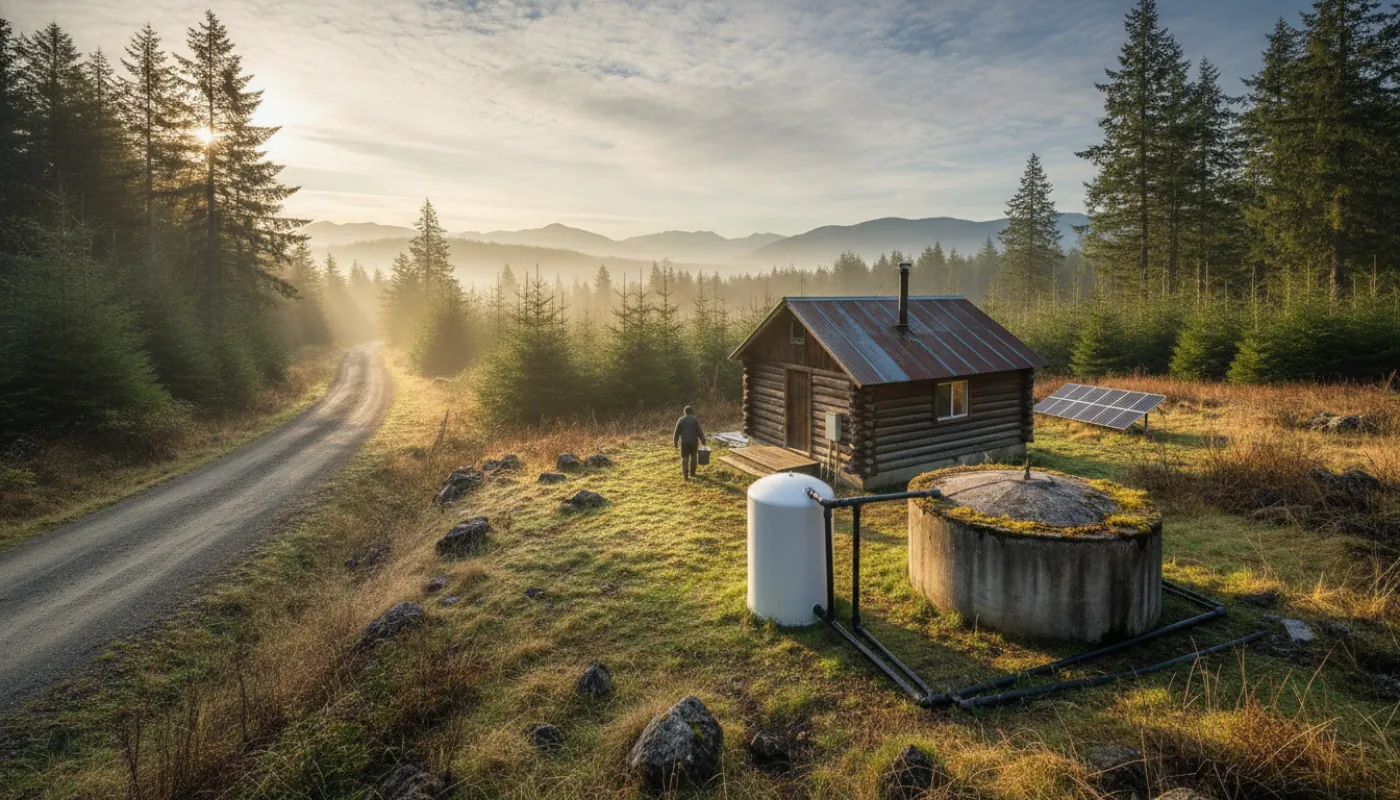
Neither system delivers potable water on its own, treatment is not optional. Private wells are unregulated and unmonitored, so the EPA and CDC advise testing at least once a year for total coliform bacteria and nitrate, and once for arsenic and other local contaminants; you can't see, smell, or taste any of them. Rainwater and cistern water is worse on paper: roof runoff carries bird droppings, dust, and pathogens, so it is not drinkable until it's filtered and disinfected. In practice that means a treatment train (sediment filtration, then disinfection by UV, chlorination, or boiling), sized to whatever your water test turns up. Contact your county health department for the required tests and any well-permit rules before you drill or drink. Budget for the treatment gear as part of the system, not an afterthought.
Which System Fits Your Off-Grid Property
Choose a drilled well if: water table depth is under 150 feet (check with local drillers), your property sits in a humid or temperate climate with stable aquifers, you have a 10+ year time horizon for the investment to amortize, and you want zero logistics overhead. Wells demand less active management and scale to household size without incremental cost. They're the default choice for off-grid operators in the eastern US, Midwest, and Pacific Northwest.
Choose a cistern if: rainfall is reliable and regular, truck access is convenient and affordable, your water needs are modest, or you're renting and can't drill. Cisterns are portable (you can take the tank with you), affordable to install, and give you visible control over your water supply. They're popular in dry Western regions and in communities where well drilling is complicated or prohibited. The hybrid approach combines a shallow well (if feasible) with a 2,000–3,000 gallon cistern for dry-season reserves. This costs $10,000–$25,000 total but eliminates the biggest risk of either system: well failure or cistern depletion. Before you drill or buy, talk to neighbors about their system, contact your county health department about well regulations and water testing requirements, and get at least two drilling quotes if you're considering a well. Schedule the conversation early, permitting timelines vary widely, and some counties require site inspections before drilling is allowed. Your water choice shapes everything downstream: power demand, plumbing complexity, and long-term independence.