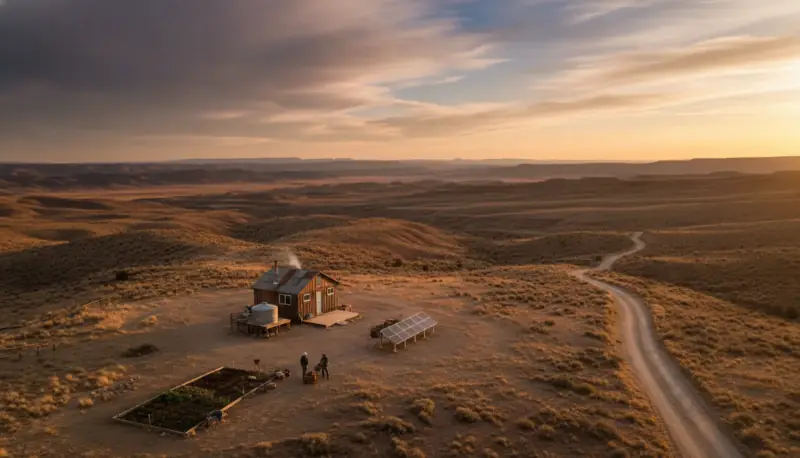
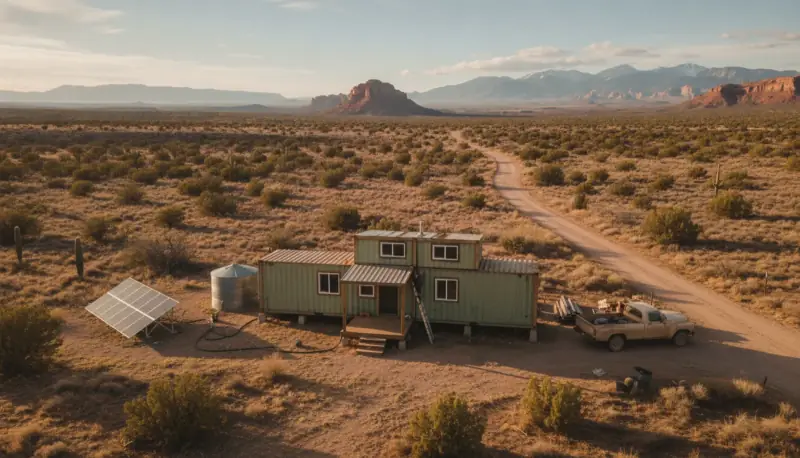
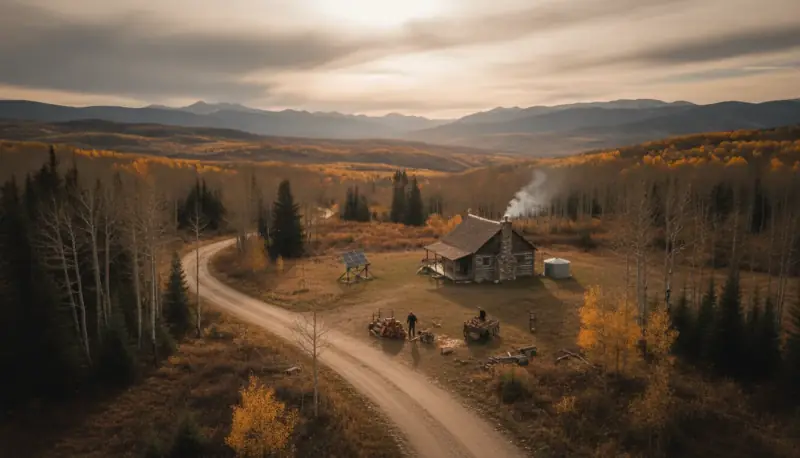
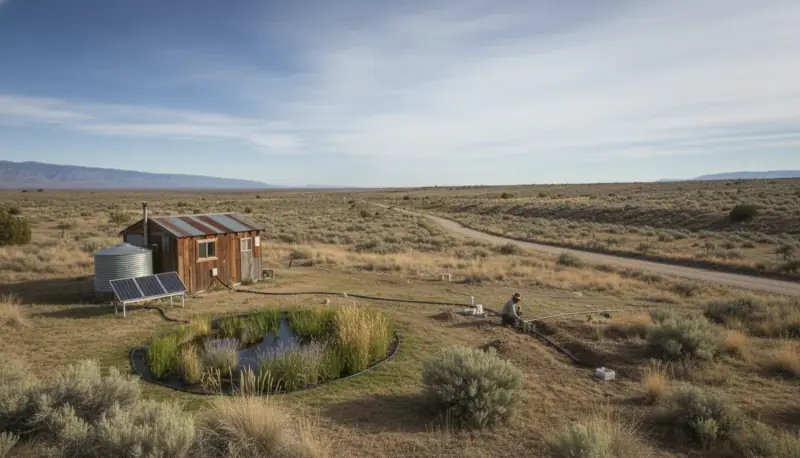
A tour of an off-grid community is your chance to see whether the lifestyle and infrastructure match your expectations, but many buyers treat it like a house tour, focusing on individual lots while missing the bigger picture. What matters isn't just the property itself, but the systems that sustain it: the water infrastructure, the governance structure, the road maintenance, and the people running it all. Before you commit to a community, you need to understand how it actually works, what rules bind you, and whether the shared systems have been maintained or deferred. This checklist walks you through the critical questions to ask and the red flags to watch for during your visit.
Community Governance & Rules
Start with the governing documents. Most off-grid communities operate under covenants, a community agreement, or an HOA, and the rules matter more than you think. Ask to see the CC&Rs (covenants, conditions, and restrictions) or governing bylaws in advance; don't wait until the tour to read them for the first time. Look specifically for rules around building styles, setbacks, and density. Some communities restrict metal roofs or require earth-tone colors. Others prohibit commercial activity or short-term rentals. If you plan to run a home business or rent out a cabin, incompatible rules will stop you cold.
Pay attention to how rules are enforced and who enforces them. Is there an HOA with a board? Who sits on it? How are disputes resolved? Ask the community manager about rule violations and enforcement actions, not to catch them being evasive, but to understand whether governance is consistent or arbitrary. Some communities are run tightly; others are run loosely. Neither is inherently wrong, but you need to know which one you're joining. Finally, ask about voting. In a true democracy, major decisions go to membership vote. In a managed community, a small board decides everything. Both models exist; understand which you're getting.
Water, Roads & Shared Infrastructure
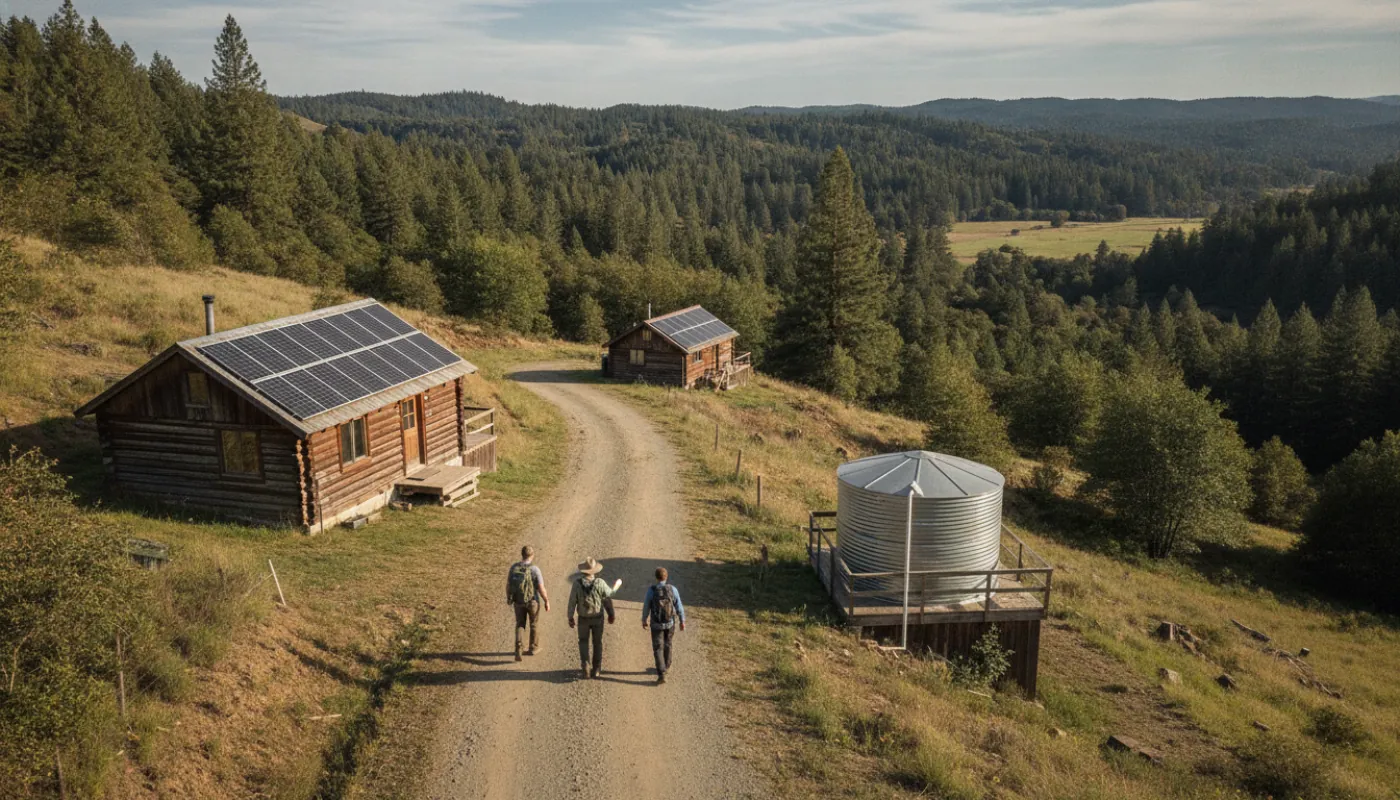
The three systems that break most off-grid communities are water, roads, and septic. Spend real time understanding each one.
For water, ask whether the community draws from a shared well, a spring, or a municipal hookup. If it's a shared well, ask about the water test results (get copies), the replacement cost, and the reserve fund. Communities that haven't budgeted for well replacement often end up with catastrophic surprise assessments. Ask about pressure; insufficient pressure means poor showers and difficult firefighting. If septic is shared, ask the same questions: testing, reserve funds, maintenance schedules. Don't assume a 20-year-old septic field will last another 20 years without asking a septic professional about remaining life.
For roads, drive every road in the community in bad weather or right after rain if you can. Some roads are paved and maintained; others are graded dirt that turns to mud. Ask who maintains them: a community crew, a contractor, or individual lot owners. How are costs divided? Is maintenance reactive (fix it when it breaks) or proactive (yearly grading)? Communities that defer road maintenance face sudden, expensive repair bills. Power infrastructure matters too. Ask about the electrical grid capacity. Some communities are on a small solar microgrid; others tap into the main utility. Backup generators for common facilities, solar incentives, and grid connection policies all affect your energy costs and resilience.
Soil, Access & Buildability
Walk the specific lot you're considering, and walk it with a critical eye. Is the soil rocky or clayish? Clay requires good drainage design, especially for septic. Steep slopes complicate building and increase costs. If the lot is small, can you actually build a house the size you want without violating setbacks?
Ask about vehicle access. How far is it from the main road to your lot? In winter, can you get an emergency vehicle in and out? Some off-grid communities are genuinely remote; others have only short, rough access roads. If you have a vehicle breakdown or medical emergency, you need to know your real response times. This isn't abstract. Ask the manager about actual incidents and how quickly help arrived. Check for utility easements. Community water lines, septic discharge fields, or power lines may cross your lot. These easements restrict where you can build and dig. They're legal; you just need to know about them upfront.
A few make-or-break checks belong here too. If the lot needs its own septic, make your offer contingent on a passing percolation (perc) test, on rural land, a failed perc can mean no house can legally be built. Confirm you have legal access, not just physical access: a lot reachable by a dirt road can still be legally landlocked, so verify a recorded easement or road frontage in the documents, never the seller's word. If there's no shared water hookup, check neighbors' well logs for likely drilling depth and cost, or the water-haul distance. And assess the specific lot's solar exposure (south-facing, minimal ridge or tree shading) and its real cell and internet coverage on the ground, both vary lot to lot.
Talk to the manager or residents about future development plans. Will your quiet cul-de-sac become a through-road? Are there unused platted lots where density could increase? Communities that master-plan ahead are stable; communities flying blind often reverse course when finances tighten, and buyers bear the cost.
Community History & Financial Health
Ask for the community's financial statements, not to become an auditor, but to understand the budget and reserve funds. A mature, well-run community sets aside funds for major repairs: road resurfacing, well replacement, septic upgrades. Communities that spend every dollar of annual dues and have no reserves are one crisis away from a devastating special assessment. Ask specifically: what's the reserve fund balance, and how many years of major repairs does it cover?
Ask about special assessments in the past five years. Have there been unexpected bills? If yes, why? Sometimes they're unavoidable (a well fails, a road collapses). Sometimes they signal poor planning or governance. Either way, you should know about them. Talk to existing residents about their experience, and do this off the record if possible. Community managers are invested in positive narratives. Residents will tell you about the three-month water crisis, the HOA drama that went to court, or the years of smooth sailing. Both data points matter. Ask three or more residents, not just those introduced to you. High turnover suggests discontent; a community where people buy and sell every two years might be beautiful, but something's wrong underneath.
The Tour Checklist
Before you leave, make sure you've gathered this information:
Community systems: Water test results, septic capacity, road maintenance plan, power infrastructure, backup options. Governance: Bylaws, covenants, enforcement examples, voting procedures, board member names and tenure. Financials: Annual budget, reserve fund balance, special assessments (past and planned), dues structure. Infrastructure: Utility locations, easements affecting your lot, emergency access routes, winter road conditions. Development: Master plan, unused platted lots, zoning restrictions, future upgrades. Legal & risk: Recorded legal access to your lot, a preliminary title report and title insurance, the FEMA flood zone and wildfire-risk rating, and whether property insurance is even available and affordable for the area.
Ask the manager for contact information for a licensed surveyor and a septic specialist who work in the area. Call them after your tour. They'll tell you the real story about soil conditions and infrastructure challenges in ways the community can't or won't. Take photos of infrastructure, road conditions, and utility installations for reference. And if you find the community attractive, hire an inspector who specializes in off-grid properties: someone who understands well systems, septic, and remote power and water.
The best buy-in decision isn't made during the tour. It's made in the weeks after, when you've reviewed the documents, talked to residents, and hired professionals to assess the property independently. Use the tour to gather information; use analysis to make your decision.